Do Gift Cards Expire? 2026 State-by-State Legal Guide
Federal law gives you 5 years. 14 states protect you longer. When balances expire, when dormancy fees are illegal, and how to cash out leftover credit.
Mother's Day weekend is the second-highest gift-card sales spike of the year, behind only December. Americans will spend an estimated $38 billion on Mother's Day in 2026 according to the National Retail Federation, and a meaningful slice of that walks out of the store as a plastic rectangle that may sit unredeemed for years. So the practical question — do gift cards actually expire? — is not a trivia question, it's a money question. The federal floor under the Credit CARD Act of 2009 is five years from issuance or last load, with strict limits on inactivity fees. But fourteen states have written stronger protections on top of the federal floor, and a smaller group force retailers to refund unused balances under $5–$10 in cash on demand. This guide walks through the federal rule, the state-level upgrades, the loopholes that catch shoppers, and the practical playbook for recovering money on a card you forgot about.
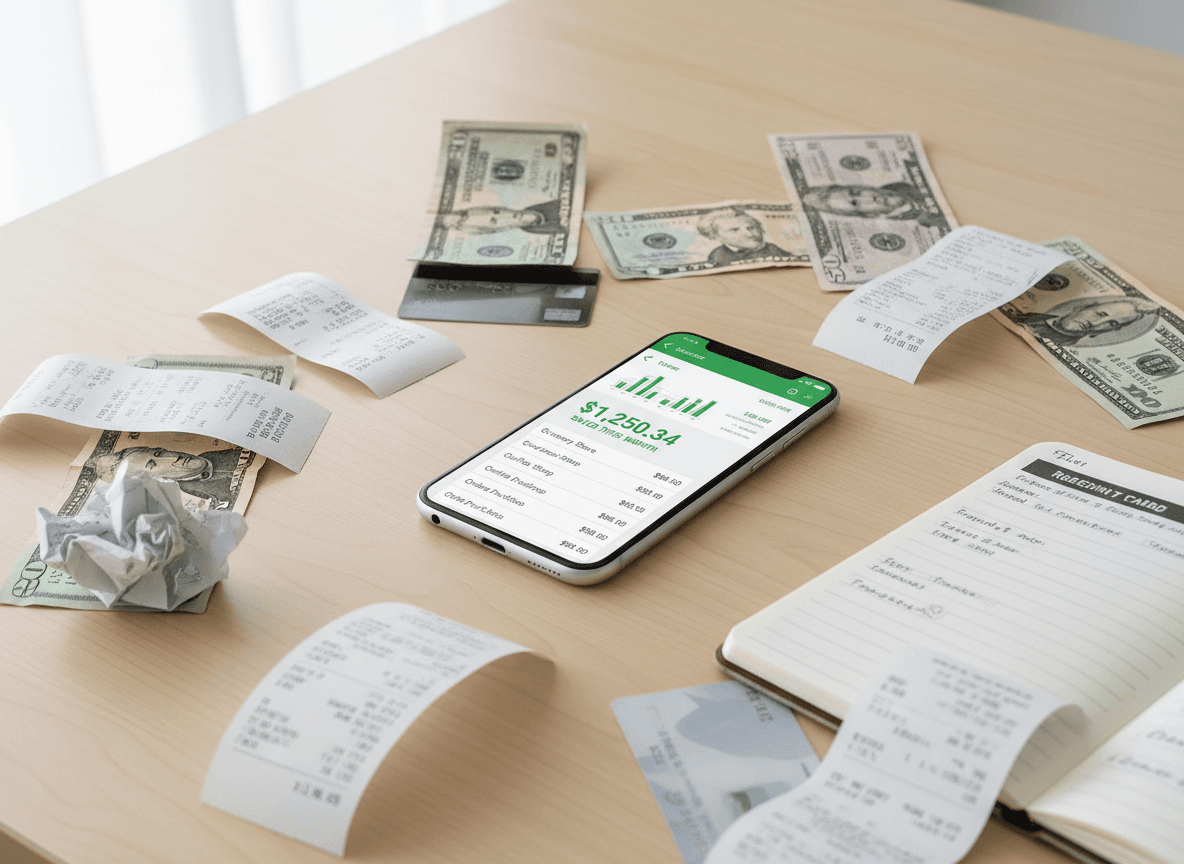
Table of Contents
- The Two-Tier Legal System: Federal Floor + State Upgrades
- The Federal Floor: What the CARD Act of 2009 Actually Says
- The 14 States That Beat the Federal Floor
- Cash-Back Laws: When Retailers Must Give You Money
- Dormancy and Inactivity Fees: When They're Legal
- Five Card Types Federal Law Does Not Protect
- The "Breakage" Economy: $3–8 Billion a Year
- What to Do If Your Card Expired or Was Charged Fees
- State-by-State Cheat Sheet
- How Purchy Tracks Gift Card Balances
- FAQ
The Two-Tier Legal System: Federal Floor + State Upgrades
Gift cards in the United States are governed by two layers of law, not one. The bottom layer is federal: the Credit Card Accountability Responsibility and Disclosure Act of 2009 (the "CARD Act") wrote a national minimum standard for store gift cards and general-purpose prepaid cards. The Federal Reserve issued the implementing regulations under 15 U.S.C. §1693l-1, and most provisions took effect August 22, 2010, with the disclosure requirements for cards issued before April 1, 2010 effective January 31, 2011.
Above that floor, individual states are free to write stricter consumer protections — and many have. A short list of states have effectively eliminated expiration dates entirely, others impose a longer minimum than the federal five years, and a separate cluster of states force retailers to refund small leftover balances in cash on demand instead of letting the value sit unused on the card. The state law that controls is generally the one where the card was purchased, though some statutes also reach issuers domiciled in the state.
This dual-tier structure has two practical consequences for shoppers. First, the answer to "does my gift card expire?" depends on where the card was bought, not where you currently live. Second, the answer to "can the retailer charge me a fee for not using it?" depends on the same fact. A Massachusetts-issued card and a Texas-issued card carry different rules even if they sit in the same wallet.
The Federal Floor: What the CARD Act of 2009 Actually Says
The CARD Act's gift card provisions live in Title IV of the statute and are codified at 15 U.S.C. §1693l-1. Stripped to plain English, the federal rules are:
Five-year minimum expiration. A store gift card or general-use prepaid card cannot have an expiration date earlier than five years after the date the card was issued, or the date funds were last loaded onto it — whichever is later. Reloading a card resets the five-year clock. The expiration date and any fee structure must be clearly and conspicuously printed on the card itself.
Dormancy and inactivity fees, but only after 12 months. A service fee, dormancy fee, or inactivity fee can be assessed only if there has been "no activity" with respect to the card in the 12-month period ending on the date the fee is imposed. Once the 12-month threshold is crossed, no more than one fee per month may be charged. Fees must be disclosed before the card is purchased, in any sales channel — in-store, online, or by phone.
Disclosure of fees, in writing, before purchase. The seller must tell the buyer, prior to purchase, that dormancy/inactivity/service fees may be charged, the dollar amount of those fees, the frequency at which they may be assessed, and the conditions that trigger them. The disclosure has to be made regardless of whether the purchase is in-person, by internet, or by telephone.
The remedy is replacement, not forfeiture. If a card with an expiration date that violates the five-year floor is cancelled by the issuer, federal regulation requires the issuer to replace the card or refund the remaining funds at no cost — the issuer cannot pocket the balance.
The federal regime is, at its core, a "minimum five years plus disclosure" framework. It does not abolish expiration dates outright; it just makes them illegal in the first five years. After that window, a card can lawfully expire, and the unredeemed balance can be retained by the issuer (subject to state escheat law). Which is why the state-level upgrades discussed in the next section matter so much.
The 14 States That Beat the Federal Floor
Fourteen states have enacted gift-card laws that go further than the federal floor — either by eliminating expiration dates entirely, by setting a longer minimum, or by banning post-purchase fees that the CARD Act would otherwise allow.
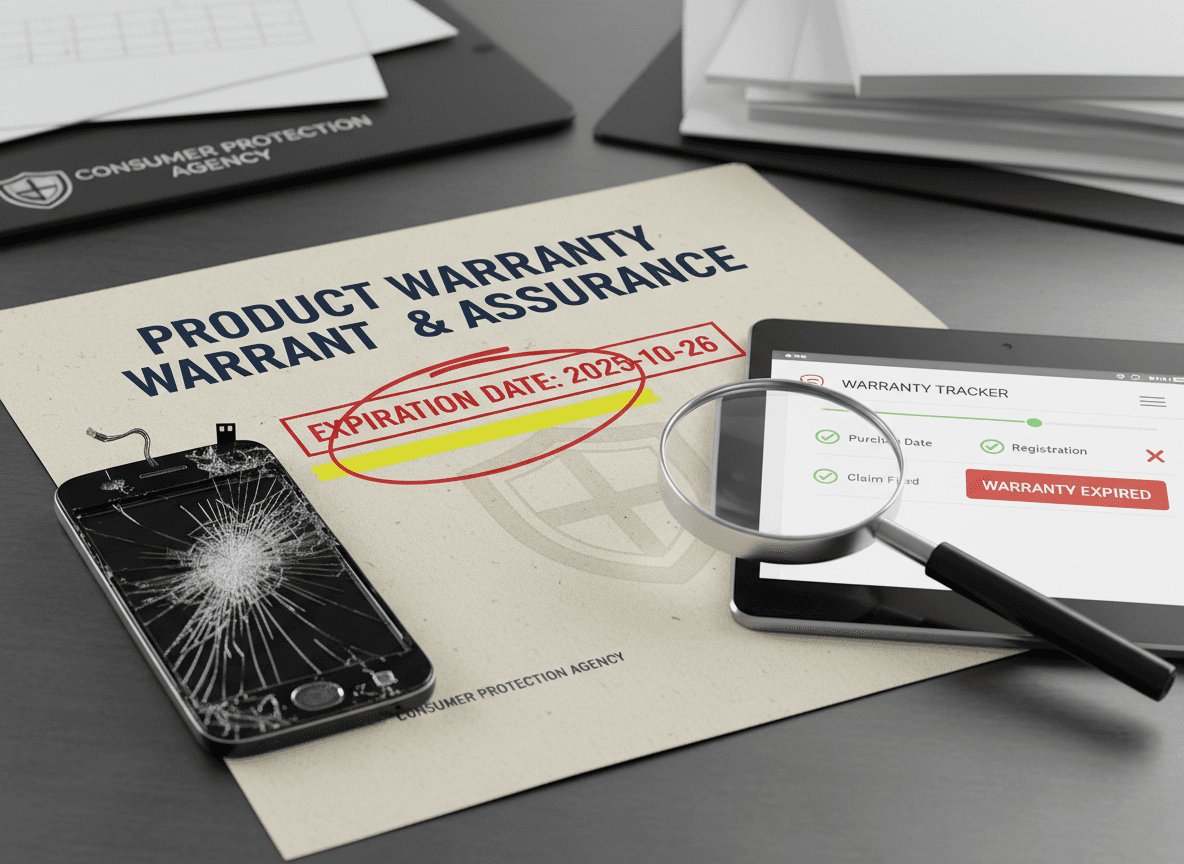
The strongest cluster of consumer protections sits in California, where Civil Code §1749.5 generally prohibits both expiration dates and service fees on gift certificates and store gift cards (with narrow exceptions for promotional, loyalty, and donated cards). California also requires retailers to redeem any remaining gift-card balance under $10 in cash on the consumer's request — discussed in detail in the cash-back section below. Connecticut, Florida, Maine, Minnesota, New Jersey, Rhode Island, Vermont, and Washington have all enacted comparable "no expiration, no fees" statutes for store-issued gift cards.
Other states impose a longer minimum than the federal five years. Massachusetts stands out: M.G.L. c. 200A §5D requires that a gift certificate sold in the state be valid for at least seven years from issuance. Maryland requires four years; New Hampshire imposes a five-year minimum tied to its escheat code; Hawaii requires two years and prohibits fees during that period.
A handful of other states regulate the fee side without prohibiting expiration outright. New York's General Business Law restricts both expiration dates and fees on gift certificates issued by retailers, with specific carveouts for promotional cards. Oregon prohibits expiration dates entirely on gift cards sold in the state and bans fees other than activation. The exact statute citations and a state-by-state summary appear in the state cheat sheet at the end of this guide.
The pattern across the strongest-protection states is consistent: store-issued gift cards are treated as the consumer's money, not as the retailer's float. That framing matters when you walk up to a customer-service counter and ask for cash on a low balance — in California, Connecticut, Maine, Massachusetts, Montana, New Jersey, Oregon, Rhode Island, Vermont, and Washington, a yes is the legally correct answer, not a courtesy.
Cash-Back Laws: When Retailers Must Give You Money
The single most under-used consumer right in this body of law is the cash-redemption requirement. Several states require retailers to refund the remaining balance on a store gift card in cash, on the consumer's request, once the balance falls below a stated threshold. The thresholds vary, but the consumer-side mechanic is the same: present the card at the counter, ask for the balance back as cash (or a check), and the retailer is obligated to issue it.
| State | Cash-Back Threshold | Statute |
|---|---|---|
| California | Under $10 | Cal. Civ. Code §1749.5(b)(2) |
| Colorado | Under $5 | C.R.S. §6-1-722 |
| Connecticut | Under $3 | Conn. Gen. Stat. §3-65c |
| Maine | Under $5 | 33 M.R.S. §1953(1)(G) |
| Massachusetts | Under $5 (or 10% of original face value, whichever is greater) | M.G.L. c. 200A §5D |
| Montana | Under $5 | Mont. Code Ann. §30-14-108 |
| New Jersey | Under $5 | N.J.S.A. §56:8-110 |
| Oregon | Under $5 | O.R.S. §646A.276 |
| Rhode Island | Under $1 | R.I.G.L. §6-13-12 |
| Vermont | Under $1 | 8 V.S.A. §2702 |
| Washington | Under $5 | RCW 19.240.020 |
A few practical notes. First, the threshold is a floor for the consumer's right, not a ceiling on the retailer's discretion — many national chains will redeem balances under $5–$10 in cash even outside these states because the operational cost of administering the rule on a per-state basis exceeds the breakage value. Second, the right is triggered by the card balance, not the original face value: a $50 card spent down to $7.42 in California qualifies. Third, the retailer is allowed to verify the card and the balance before paying out, which means the in-person counter will work better than mailed redemption.
The federal CARD Act does not contain an analogous cash-redemption requirement. Outside the eleven states above, you are limited to spending the leftover balance, transferring it to another product the retailer offers, or selling the card on a secondary market — see our refund vs store credit guide for the practical conversion playbook.
Dormancy and Inactivity Fees: When They're Legal
The CARD Act allows dormancy and inactivity fees only under three combined conditions: (1) the card has had no activity for a full 12 months ending on the fee assessment date; (2) the fee, the assessment frequency, and the trigger were disclosed to the buyer before purchase; and (3) no more than one fee is assessed in any single month. Two missing facts disqualify a fee — undisclosed at purchase, or assessed more than once a month — and the fee is void.
State law sometimes goes further. California, Connecticut, Florida, Maine, Massachusetts, Minnesota, New Jersey, Rhode Island, Vermont, and Washington effectively prohibit dormancy fees on store-issued gift cards regardless of the 12-month federal threshold. In those states, a fee imposed on a store gift card is unlawful at any time. New York restricts fees to once per month and requires that the cardholder receive at least 11 months of fee-free use before any service fee can begin.
The single biggest source of unlawful fees in the field, in our review of consumer complaints, is the retroactive fee — a card sold before the consumer disclosed the fee terms is then assessed dormancy fees once it crosses the 12-month threshold. The CARD Act explicitly requires pre-purchase disclosure; a fee assessed without that disclosure is unenforceable, and the consumer is entitled to a refund of the fee amount. Document the original packaging if you have it, request the cardholder agreement in writing if you don't, and dispute the charge with the issuer's customer service before escalating.
Five Card Types Federal Law Does Not Protect
Not every plastic card with a balance is a "gift card" for purposes of the CARD Act. The federal protections do not extend to:
1. Loyalty, award, or promotional gift cards. A card that was given to you as part of a loyalty program (airline miles, store rewards, sweepstakes prize) is a separate regulatory category. Promotional cards may legally expire on a much shorter timeline — typically 90 days to one year — and may carry no consumer protection beyond what the issuer voluntarily provides. The card must be conspicuously labeled as promotional or loyalty for this exemption to apply.
2. Reloadable cards not marketed as gift cards. A general-purpose reloadable prepaid card used for payroll, government benefits, or as a checking-account substitute is regulated under different sections of Regulation E, not under the gift card provisions. Expiration and fee rules vary.
3. Telephone calling cards. Phone-service cards are excluded from the CARD Act's gift card title.
4. Paper certificates issued solely in paper form. Some statutes treat paper-only gift certificates differently from plastic store gift cards.
5. Cards usable solely at a single specified merchant location, given as part of an event. A card redeemable only at a single venue and tied to event admission may fall outside the CARD Act's scope.
A practical implication: if a card is labeled "Promotional," "Reward," or "Bonus" anywhere on its face, the five-year minimum and the 12-month dormancy floor probably do not apply. Read the disclosure on the back, because the expiration date may be six months out, and there is no federal remedy. State law in California, Massachusetts, and a handful of others will still protect promotional cards in some circumstances; outside those states, the disclosure on the card controls.
The "Breakage" Economy: $3–8 Billion a Year
The accounting term for unredeemed gift card value is breakage, and it is large enough that publicly traded retailers report it as a distinct revenue line in their financial statements. Industry estimates of the U.S. breakage rate cluster between 10% and 19% of issued value, depending on retailer category, card type, and the time window measured. Wikipedia's gift card entry, citing earlier industry research, estimated approximately $8 billion in U.S. breakage gains in 2006, with $55 million per day of unredeemed value at the 2012 era benchmark. Adjusted for the growth in U.S. gift card spending — over $100 billion annually since the early 2010s — the modern breakage figure sits in the multi-billion-dollar range each year.
The math from a single Mother's Day gift card: A $75 gift card given on Mother's Day with $9.30 left on it after the recipient's first shopping trip is, on national averages, more likely than not to stay at $9.30 forever. In California, Connecticut, Maine, Massachusetts, Montana, New Jersey, Oregon, Rhode Island, Vermont, or Washington, that $9.30 is legally redeemable in cash on request. In the other 40 states, it is functionally lost — unless the recipient remembers to use it during a future trip, or until the retailer's escheat clock runs and the balance flows to state unclaimed-property administration (where it can be claimed back by the original purchaser, typically with a paper trail).
The structural reason breakage exists is that gift cards are an uncertain liability for the retailer — at issuance, the retailer takes the cash but has not yet booked the cost of goods sold. Under U.S. GAAP, retailers can recognize a portion of unredeemed gift card balances as revenue once historical experience indicates the balance will not be redeemed (the proportional method under ASC 606). For high-volume issuers, this is a meaningful and predictable revenue stream — which is the same reason so many retailers fight cash-back legislation in state legislatures. The breakage line item on the income statement is, in plain terms, money that consumers paid into the system and never got back out.
The defensive playbook is mechanical: track every gift card you receive, record the issuance date and the original face value, and check the balance before any return-window or expiration deadline lapses. The single highest-leverage moment to recover value is just before a state escheat date — at which point the retailer is required to either honor the balance or remit it to the state, and the consumer's request shifts from goodwill to legal entitlement.
Don't let another gift card balance disappear
Purchy's deadline tracker monitors gift card balances, retailer-specific expiration windows, and the cash-back threshold in your state — automatically. Forgotten balances are the largest single source of consumer breakage; ours is the cheapest fix.
Join the Purchy waitlist →What to Do If Your Card Expired or Was Charged Fees
If you are holding a gift card that has expired in less than five years from its issuance date, or that has had inactivity fees charged before the 12-month no-activity threshold, the federal CARD Act gives you a remedy. The practical recovery sequence is:
Step 1: Document the card. Photograph the front and back. Note the issuance date if printed (or the date you received it, with any supporting evidence — receipt, gift tag, email). Note the original face value, the current balance, and any expiration date or fee disclosure printed on the card.
Step 2: Contact the issuer's customer service. Most major retailers have a dedicated gift card services line. Cite 15 U.S.C. §1693l-1 directly when a representative pushes back: "Federal law requires this card to be valid for at least five years from the date of issuance and prohibits inactivity fees during the first 12 months of inactivity. Please reinstate the balance." A documented, statute-cited request typically resolves at the first level of customer service.
Step 3: If denied, escalate in writing. Email the retailer's executive customer service or general counsel's office. Reference the specific federal violation. Many retailers maintain a parallel review process for written escalations that resolves faster than the phone line.
Step 4: File a complaint with the Consumer Financial Protection Bureau. The CFPB has direct enforcement authority over the CARD Act's gift card provisions and accepts complaints at consumerfinance.gov. CFPB complaints generate a written response from the issuer within 60 days and become part of the public complaint database.
Step 5: Check your state's unclaimed property database. If the card has actually expired and the retailer remitted the balance under your state's escheat law, the funds may be sitting in your state's unclaimed-property registry under your name (or the gift purchaser's name). Most states maintain a free search at unclaimed.org. This is the single most-overlooked recovery path.
For state-law violations — a California card with an unlawful expiration date, a Massachusetts card that expired before seven years, a small balance the retailer refused to refund in cash in a cash-back state — the analogous escalation path runs through the state attorney general's consumer protection division. Most state AGs accept gift card complaints online and treat them as a high-volume, well-understood category.
State-by-State Cheat Sheet
This summary captures the dominant rules in 14 of the strongest-protection states. State laws do change; check the current statute before relying on a specific number, and verify with your state attorney general for litigation-grade certainty.
| State | Expiration | Dormancy/Inactivity Fees | Cash-Back |
|---|---|---|---|
| California | Generally prohibited | Generally prohibited | Required under $10 |
| Connecticut | Prohibited | Prohibited | Required under $3 |
| Florida | Prohibited | Prohibited (post-purchase) | Not mandated |
| Hawaii | 2-year minimum | Prohibited during 2-year period | Not mandated |
| Maine | Prohibited | Prohibited | Required under $5 |
| Maryland | 4-year minimum | Restricted | Not mandated |
| Massachusetts | 7-year minimum | Generally prohibited | Required under $5 or 10% of face value |
| Minnesota | Prohibited | Prohibited | Not mandated |
| Montana | Generally prohibited | Restricted | Required under $5 |
| New Jersey | Prohibited | Prohibited | Required under $5 |
| Oregon | Prohibited | Prohibited | Required under $5 |
| Rhode Island | Prohibited (after 1 year) | Prohibited | Required under $1 |
| Vermont | Prohibited | Prohibited | Required under $1 |
| Washington | Prohibited | Prohibited | Required under $5 |
| All other 36 states | Federal floor: 5-year minimum | Permitted after 12 months inactivity, max 1/month | Not federally required |

How Purchy Tracks Gift Card Balances
The single largest source of consumer breakage is the gift card you forgot you had. Purchy was built around the same insight that drives the deadline tracker for return windows and the warranty tracker for product registrations: most consumer money is lost not to bad policy but to forgetting. The gift-card module captures issuance dates, original face values, and current balances directly from the email confirmations and digital receipts a consumer already receives. The alerts surface three deadlines that matter:
The state cash-back trigger. When a card balance drops below the cash-back threshold for the state where the card was purchased, the alert tells you the legal right is now active and the cash request can be made.
The expiration warning. 90, 30, and 7 days before any printed expiration date — which under the CARD Act has to be at least 5 years from issuance — the alert nudges the redemption.
The state escheat clock. Just before a state's unclaimed-property dormancy period (typically 3 to 5 years), the alert prompts redemption while the balance is still under the retailer's direct control and has not yet flowed to state unclaimed-property administration.
The same architecture runs across warranty deadlines, digital receipt retention, receipt tracking, and return-window monitoring. The unifying problem is the same: consumer money sits inside retailer ecosystems with deadlines that no one is tracking, and the default outcome is that the money stays there. Purchy's job is to make sure it doesn't.
FAQ
Do gift cards expire under federal law? A store gift card or general-use prepaid card cannot expire earlier than five years after issuance or the date funds were last loaded onto the card, under 15 U.S.C. §1693l-1. After that five-year minimum window, expiration becomes lawful unless state law overrides it.
Which states ban gift card expiration entirely? California, Connecticut, Florida, Maine, Minnesota, New Jersey, Oregon, Rhode Island, Vermont, and Washington effectively prohibit expiration on store-issued gift cards (with narrow exceptions for promotional, loyalty, and donated cards). Massachusetts requires a seven-year minimum. Maryland requires a four-year minimum. Hawaii requires a two-year minimum.
Are dormancy fees on gift cards legal? Under federal law, yes — but only after 12 consecutive months of no activity, only if disclosed at purchase, and only at a maximum frequency of one fee per month. State law in California, Connecticut, Florida, Maine, Massachusetts, Minnesota, New Jersey, Rhode Island, Vermont, and Washington effectively prohibits dormancy fees on store-issued gift cards regardless of the federal threshold.
Can I get cash back for a low balance on a gift card? In 11 states — California (under $10), Colorado (under $5), Connecticut (under $3), Maine (under $5), Massachusetts (under $5 or 10% of original face value, whichever is greater), Montana (under $5), New Jersey (under $5), Oregon (under $5), Rhode Island (under $1), Vermont (under $1), and Washington (under $5) — yes, on request. In the other 39 states the right does not exist by statute, though many national retailers will redeem small balances anyway.
What if my card expired in less than five years? That violates the federal CARD Act. Document the card, contact the issuer's customer service citing 15 U.S.C. §1693l-1, escalate in writing if denied, and file a complaint with the Consumer Financial Protection Bureau if the issuer refuses to reinstate the balance. The retailer is required by federal regulation to either replace the card or refund the funds at no cost.
Do promotional or rewards gift cards have to follow the five-year rule? No. The CARD Act explicitly excludes loyalty, award, and promotional gift cards from the five-year minimum. Promotional cards may legally expire on a much shorter timeline (often 90 days to one year) provided the card is conspicuously labeled as promotional and the expiration date is clearly disclosed.
What happens to gift card balances when a retailer goes out of business? Bankruptcy generally suspends gift card honor obligations during reorganization and may extinguish them entirely in liquidation. The card balance becomes an unsecured claim against the bankruptcy estate, often paid at pennies on the dollar if at all. See our store going-out-of-business refund guide for the full playbook.
How long does the retailer have to refund a small balance in a cash-back state? Most state cash-back statutes do not specify a turnaround time but are interpreted as a "present-and-pay" obligation — the consumer presents the card at the counter, the retailer verifies, and the cash is paid the same visit. A retailer that requires mail-in submission for an in-store-purchaseable item is on weak statutory ground.
Can a retailer charge a fee for issuing the gift card itself? Yes, the CARD Act permits issuance/activation fees at the time of sale, separate from the post-purchase dormancy/inactivity fee restrictions. Activation fees are common on general-purpose prepaid cards (Visa, Mastercard) and rare on store-specific gift cards.
Where do unclaimed gift card balances eventually go? In most states, unredeemed gift card balances are subject to escheat law — the retailer must remit the unclaimed value to the state's unclaimed-property administration after a dormancy period (typically 3 to 5 years). The original purchaser can usually claim those funds from the state's unclaimed-property database for free; consumers can search at unclaimed.org or their state treasurer's website.
Stop losing money to forgotten balances
Purchy tracks gift card balances, return-window deadlines, and warranty registrations — across every retailer you shop, automatically from your inbox. The deadlines that matter, in one place.
Join the Purchy waitlist →Related Reading
- Refund vs Store Credit 2026: How to Get Cash Back
- Store Going Out of Business: How to Get a Refund in 2026
- Warranty Tracking Guide 2026: Never Miss a Coverage Deadline
- How to Get Money Back After the Return Window Closes
- How to Track Receipts Digitally in 2026
- Best Receipt Tracker Apps 2026
- How to Get a Refund for a Forgotten Subscription Charge
This guide is informational and not legal advice. State gift-card laws are amended periodically; verify the current statute or consult a consumer-protection attorney before acting on a specific dispute. Last verified May 9, 2026 against 15 U.S.C. §1693l-1, the NCSL gift card statutes tracker, and California Civil Code §1749.5.
Wake to one edition. Only what matters.
$12.99 a month or $99.99 a year. Cancel any time from your Apple Account.
Download on iOS →